4 Keyword Match Types in Google Ads [2026 Edition]
SEO vs SEM are the key terms of digital marketing, but what sets them apart?
The Google search results page contains both organic and paid results.
But the key difference.
Search Engine Optimization (SEO) attracts traffic organically, while Search Engine Marketing (SEM) attracts traffic through paid advertising, like PPC ads.
Both SEO and SEM are complex (with algorithms and bidding strategies), so it’s hard to know whether to invest in organic search skills or paid advertising skills for a secure future.
Choosing between SEO vs SEM for your digital marketing career can be confusing, but you’ll have everything down by the time we’re done.

Search engine optimization focuses on optimizing a website to get traffic from organic search results. On the other hand, search engine marketing focuses on getting traffic and visibility from paid search.
To explore in detail, take a closer look.
Search Engine Optimization (SEO) aims to improve the rank of a website or online content over a period of time to rank higher on search engine results pages (SERPs).
In short, SEO is the process to rank your website #1 on Google search results.
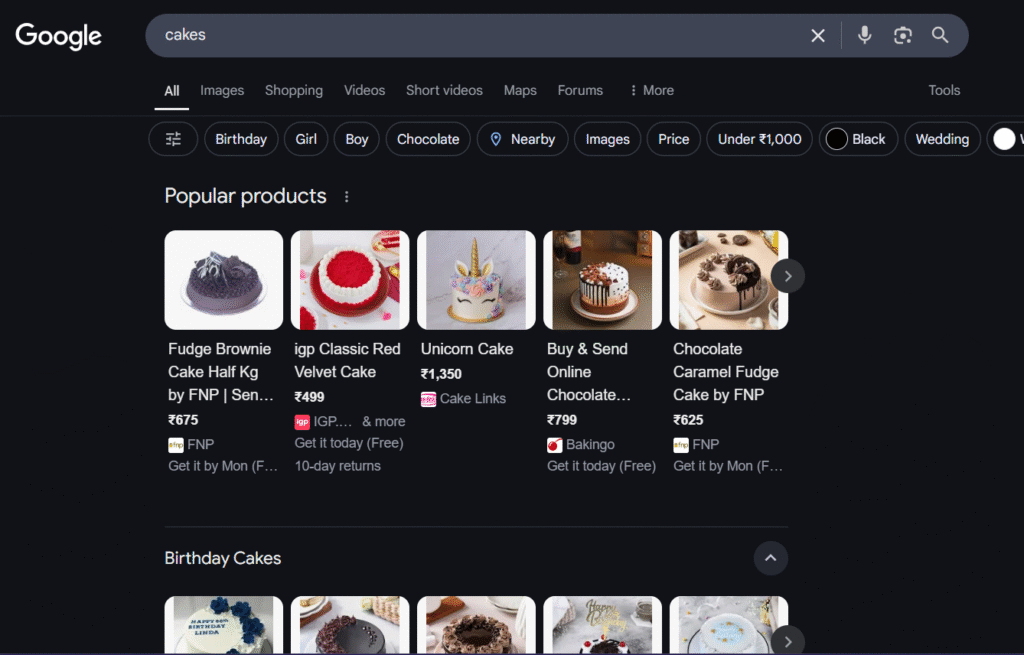
For example, if your search query is cakes, this may insist on a bakery, ingredients, or a recipe. This type of intent reflects whether a customer is ready to buy or looking to learn more about a topic.
As you hit enter, the search results appear to be:
There are three ways in SEO to gain more traffic to your website:
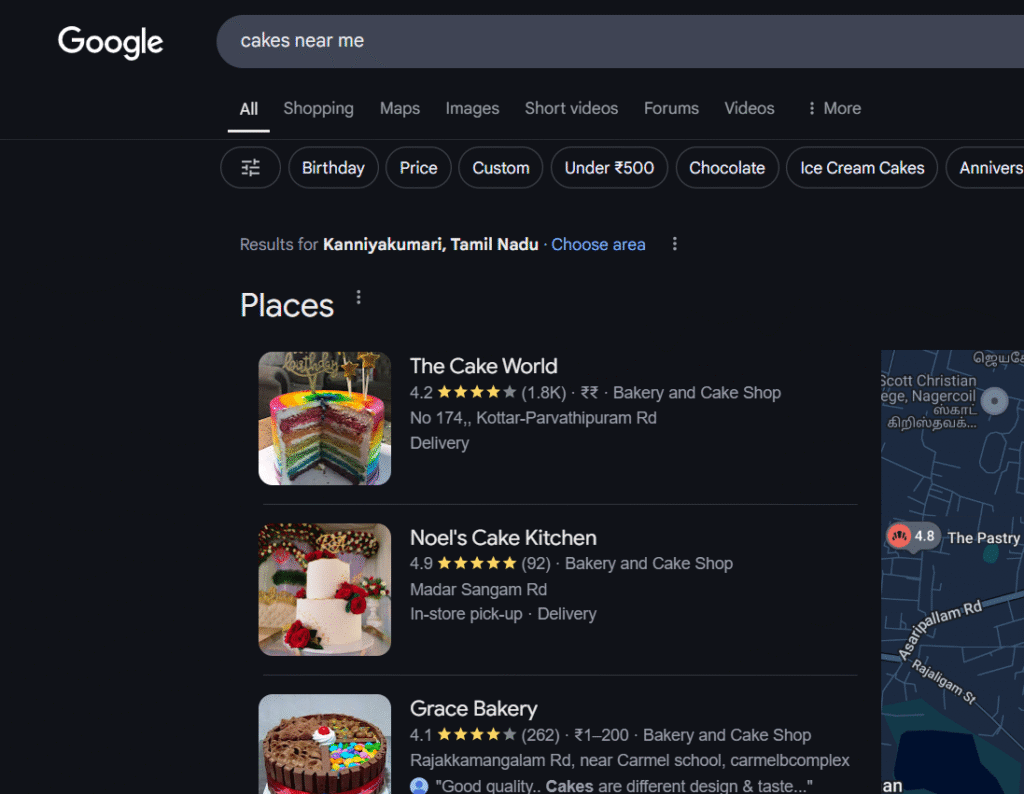
Now you have an idea about SEO, next we’ll give you more details about search engine marketing (SEM).
Search engine marketing (SEM) is a marketing strategy that promotes a website or business on search engine result pages (SERPs). It uses paid search advertising (PPC) and search engine optimization (SEO) to promote your product or service online.

In short, SEM is the paid version of SEO.
SEM works to drive immediate traffic to your website through paid ads – search ads, shopping ads, or local ads.
When using strategies like pay-per-click (PPC) to boost visibility in the SERPs, it’s important not to simply spend money on ads and expect positive results. Your budget for the ads should align with your customers’ search queries.
Here, SEO and SEM hold things together.
With SEM, you can effectively target keywords that align with your customers’ searches, track performance, refine ad copy, and optimize bidding strategies as needed. Marketing skills like PPC come under the category of SEM, so let’s explore that now.
You’ve probably heard the terms SEM and PPC in digital marketing. While they’re closely related, they’re not exactly the same thing.
SEM is actually an umbrella term that covers a variety of marketing strategies, like paid and organic.
So, where does PPC come in? It’s paid advertising to promote your brand with a certain budget. In simple terms, you pay a fee every time a customer clicks on your ad.
The goal is to reach customers who are already searching for a solution that your business offers – whether it may be a product, service, or information. PPC is a great way to:
You can see PPC ads at the top of the search engine page (SERP). These are typically labeled as sponsored ads and appear above the organic search results.
This marketing method centers on how you place and use your target keywords, so having a strategy is crucial. Why? Because your target keywords appear as ads next to your customer’s query in a variety of formats – text-based ads and visual ads.
Why does PPC matter? It enables you to advertise your products to target customers who are actively searching for specific keywords, delivering targeted traffic quickly with immediate results.
Now that we have PPC wrapped up, while it is just one part of the SEM strategy, it plays a vital role in reaching the target audience at the right time.
There are a few factors to consider to compare the two strategies.
So, deciding between SEO vs SEM depends on your business goals. Both SEO and SEM have their own pros and cons. Before applying, just look at the following details.
With Search Engine Marketing:
SEM advertising can start generating traffic to your website immediately after your campaign goes live. However, the time it takes to see meaningful results, such as conversion or return on ad spend (ROAS) can typically take time because it depends on your budget, competitiveness, the relevance of your keywords, and the quality of your ad campaign.
Imagine you own a local fitness studio offering personal training. You launch a PPC campaign using Google Ads with a monthly budget of $700. You target search terms like personal trainer near me. Once your ads go live, you start receiving impressions and clicks within the first few days.
This is the power of SEM, you get meaningful results instantly.
But your work doesn’t stop here. For the following day, you need to refine your keyword list, adjust your bidding strategy, and improve your ad copy to match customer intent. This helps to increase click-through rates and lower your cost-per-click.
With ongoing attention and optimization, you can refine your campaign, improve your ad targeting, and drive more traffic and sales over time.
With Search Engine Optimization
SEO is a long-term strategy that improves your website’s visibility in search engine results. The time it takes to see results can vary depending on the competitiveness, the quality of your website, your content quality, and how much effort you put into optimization. In most cases, improvements can take weeks or months.
Now, imagine you manage a local accounting firm. You optimize your site for keywords like tax accountant in Chennai and create location-specific service pages. You also start gathering positive Google reviews and building citations on business directories. Over time, your firm begins to rank higher for local search queries, resulting in more calls and appointment bookings from nearby clients.
But keep in mind, SEO is a slow process that builds trust and authority to your website or brand.
Choosing a career between SEO vs SEM depends on your interests, skills, and career goals.
As an SEO specialist, your focus is to improve a website’s organic visibility in search engine results. This involves in-depth keyword research, optimizing website content and structure, building high-quality backlinks, and ensuring the site is technically good.
You’ll work with tools like Google Analytics, Google Search Console, and SEO software such as Google Keyword Planner, SEMrush, or Ahrefs to monitor performance and identify areas for improvement.

An SEM specialist manages both SEO and PPC strategies, but with a primary focus on paid advertising. This includes creating and managing ad campaigns on platforms like Google Ads and Bing Ads, by choosing the target keywords, crafting compelling ad copy, and setting budgets and bid strategies.
You’ll also analyze ad performance, optimize campaigns for ROI, and adjust strategies based on click-through rate (CTR) and conversion rate.
Now that we know about SEO vs SEM, the opportunities that digital marketing brings on your platter, this future doesn’t seem that far-fetched.
Digital marketing is a booming industry. Hence, as the demand for digital marketing increases, the demand for digital marketing professionals increases too.
Thus, enrolling in our online digital marketing course in Tamil gets you a high-paying career, whether in SEO or SEM. All you need is to master some core skills of digital marketing, and you’re good to go.
So, contact NB Marketing Solutions to enroll today!