4 Keyword Match Types in Google Ads [2026 Edition]
Social media SEO is a hot topic in the digital marketing industry. Well, social media and search engine optimization (SEO) occur separately.
Google remains the top search engine as you use SEO to attract as many eyes as possible with a specific keyword. Today, nearly 65.7% of Gen Z and millennials use social media platforms to find answers to their queries. So, it’s time to unite them.
If you’re already optimizing your website for SEO, why skip it for social media? With the right strategies, you can boost your visibility, increase engagement, and drive traffic from both search engines and social media platforms at once.
In this blog, we’ll show you what social media SEO is, the importance of social media SEO, and top social media SEO strategies to boost your social media presence.

Social media SEO is the process of optimizing your social media profiles and posts with specific keywords to increase visibility in social media search results. This helps to attract potential customers and boost visibility when customers search for topics relevant to your brand.
For instance, if you search for the best restaurants in Hyderabad. You can go to YouTube, Instagram, or any other social media platform to find information or recommendations.
This is how customers use social media SEO to find information for their queries. Moreover, social media SEO has three aspects:
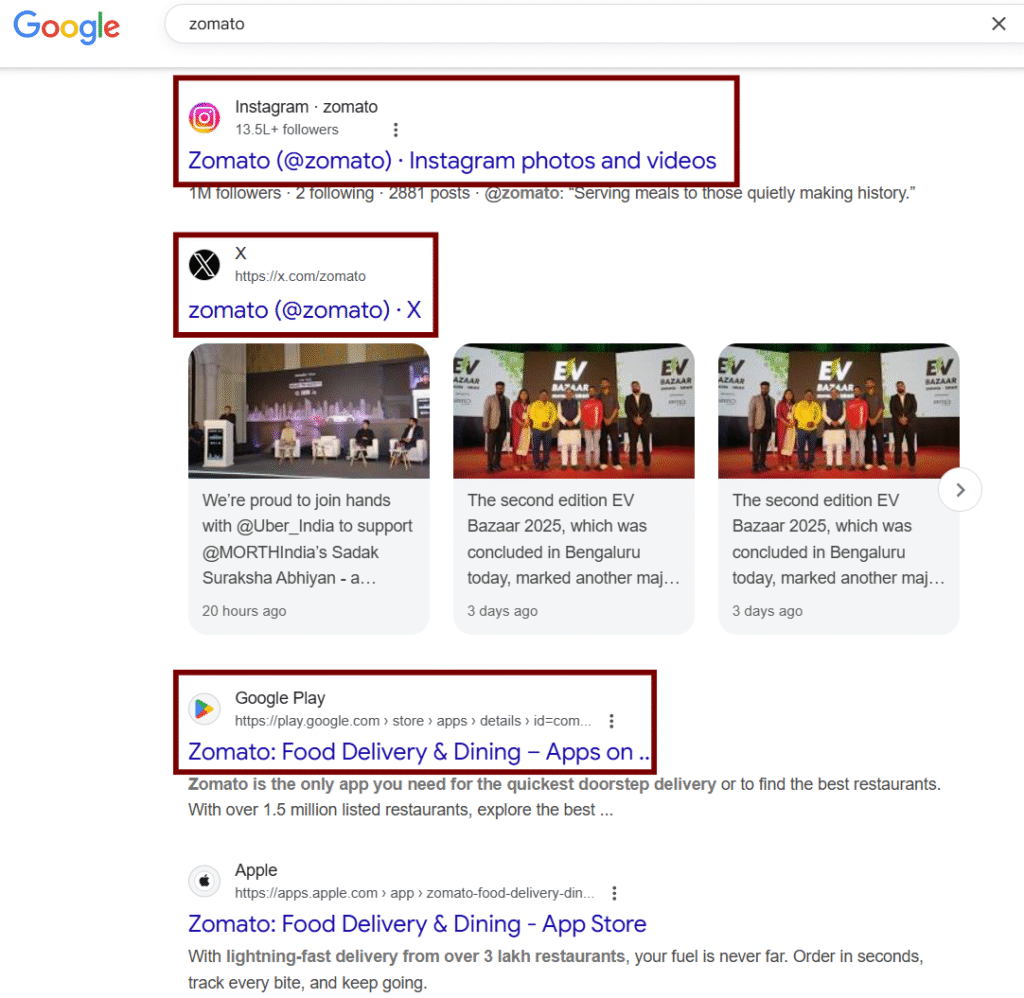
For instance, when you Google search for “Zomato,” it displays the company’s website, Instagram profile, YouTube channel, X page, and Facebook Page on the first page of results.
For example, if you search for “how to straighten your hair” on YouTube, it shows a list of video content relevant to the keyword.
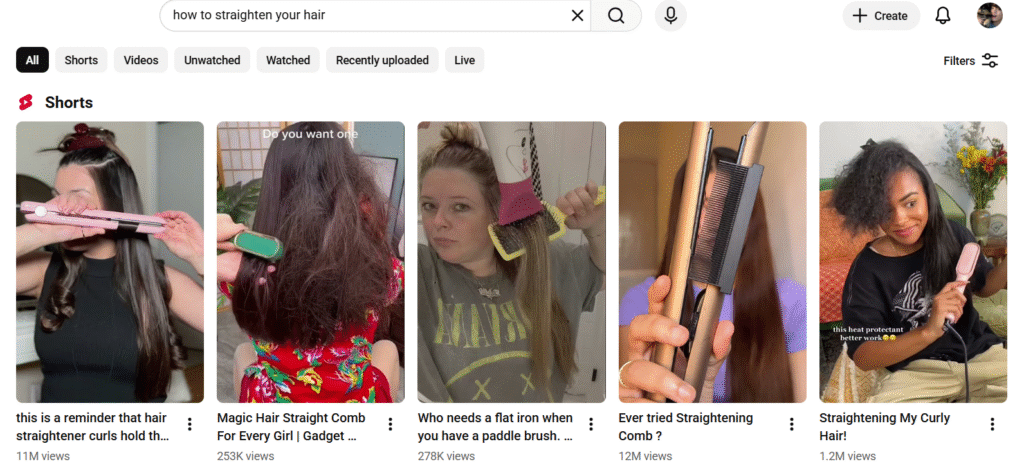
Image credits: YouTube
For instance, when you search for “hair gel” on Instagram, YouTube, or Pinterest, the creator redirects customers straight to the brand’s website (which comes under affiliate marketing) on the related topic.
While social media and SEO are different strategies, they can complement each other. The difference between search engines and social media platforms is blurring – because the goal is same – to bring visibility.
Today, customers are using social media to find answers to their questions.
The big question is, why are people using social platforms as search engines?
Customers are already spending a lot of time on social media. The average person spends over 2 hours and 35 minutes a day scrolling through social media. So instead of switching to Google, many prefer to search directly where they’re already active.
By optimizing, you can see a lot of benefits:
Some of the best social media platforms that support social media SEO efforts include:
Here are some social media SEO strategies you may try, and these strategies really work in social media platforms to increase your brand visibility.
Are they a powerful tool to amplify reach, or just visual clutter slowing down conversions? Well, social sharing buttons can be effective, but it depends on where you place them.
When used strategically, social sharing buttons can drive engagement. For instance, adding them to blog posts makes it easier for readers to share valuable content with their networks. Over 94% of customers share blog content because they think it’s helpful to others.
But, placing social sharing buttons on landing pages can be distracting. Recent study found that removing social sharing buttons increased click-through rates by 11.9%. Why? Because fewer distractions keep customers focused on specific action – signing up, downloading, or purchasing.
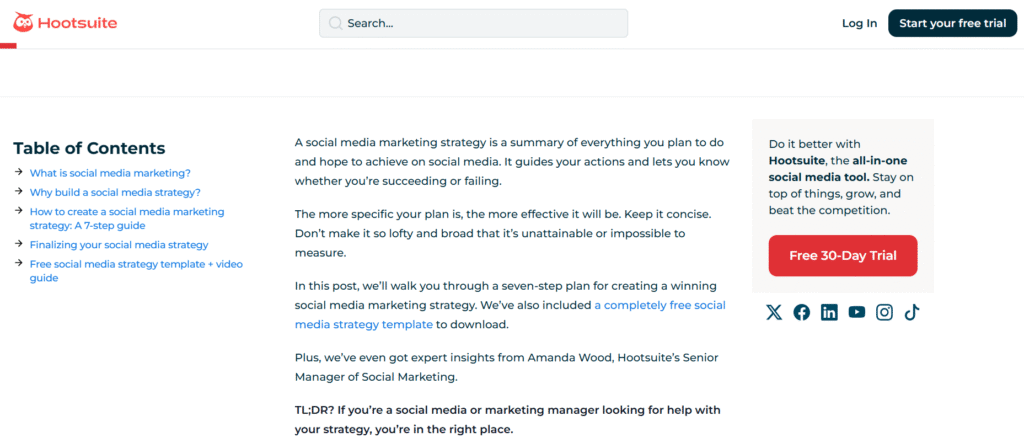
Image credits: Hootsuite
So, place social sharing buttons where sharing makes sense (like homepage, blogs, guides, or resources). You can run A/B tests to understand what works best for your audience and determine the placement on your site.
The gap between social media and search engines is blurring. This shows the keyword strategy you use for your website extends to your social media presence.
You cannot copy-paste your website keywords into every post. Do keyword research for SEO and find what keywords are popular for your niche. You can write down the list of the top keywords and start creating your social media posts. But don’t overload your posts with too many keywords.
Here’s how to identify the right keywords:
Just like SEO, content that performs well on social media has a higher chance of being shared. You can get more backlinks, which signals to search engines that your content is valuable.
But where should you actually place these links?
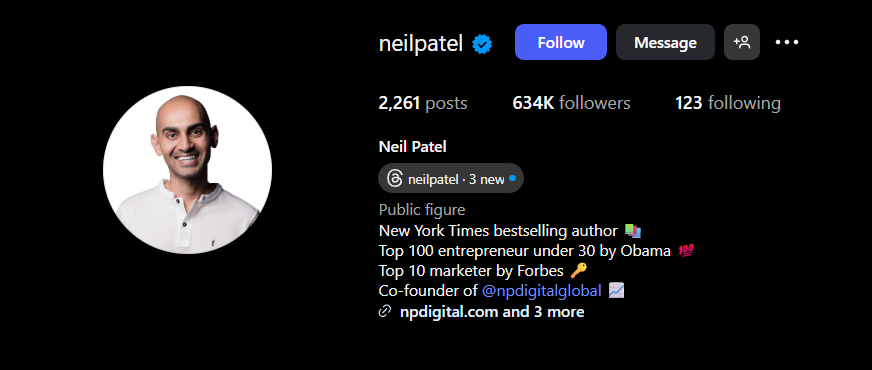
Image credits: Instagram
Why does this matter? Adding links across your social channels improves customer experience, helps customers find and trust your brand, and boosts your brand’s authenticity.
Social media SEO helps to increase your brand visibility when you use the same profile name, bio, and images across all platforms so customers and Google can easily connect the dots. For example, creator Apoorva kept her name and profile image (slightly different) consistent across Instagram, YouTube, and Pinterest.

Image credits: Instagram
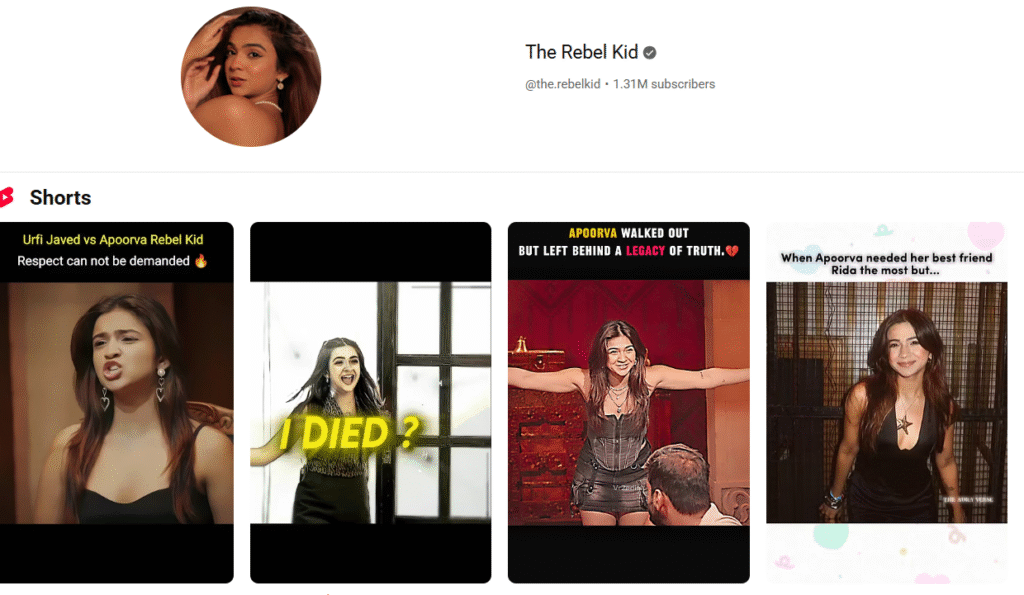
Image credits: YouTube
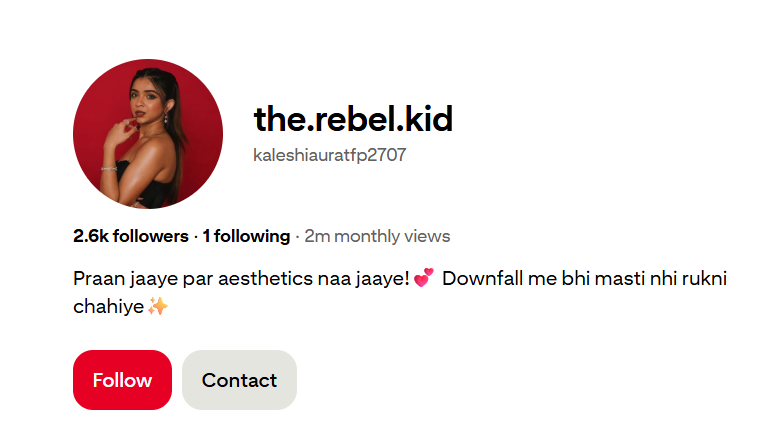
Image credits: Pinterest
When you search “the rebel kid" on Google, her verified profiles dominate the results, making her brand easy to trust.
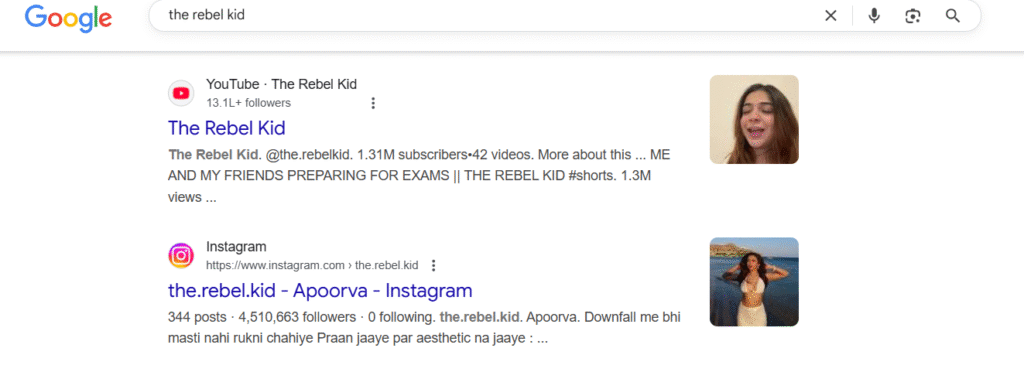
Adding niche-specific keywords to your social media bio makes your profile more search engine-friendly both on social media and Google.
Why does this matter? Not everyone is searching for your brand name. In fact, many potential customers don’t know you exist yet. Instead, they’re typing in broad or niche-specific queries like “best vegan skincare brand” or “affordable travel backpacks.” If your profile includes those keywords, you increase the chances of showing up in those search results.
You need a meta description on a webpage – short, powerful, and optimized for both humans and search engines. Likewise, social media also needs a bio to optimize social media SEO.
Your bio is a business card that gives a first impression to understand who you are and what you do. So how do you write a bio?
Here are a few best practices:
If you want your brand to stand out on social media SEO, quality visuals are non-negotiable. We don’t mean you need a professional DSLR camera to create high-quality images.
Clear, well-composed shots from your phone can be impactful when paired with strong storytelling. You need to show your personality and communicate your brand values that feel authentic.
Here are the top four best practices for shooting scroll-stopping visuals:
Influencers are the connectors between brands and audiences. In fact, 24% of shoppers purchased a product because of an influencer’s recommendation. That’s nearly one in four customers making buying decisions based on trust built through social media.
Even if your social media post doesn’t rank on Google and social media platforms. Influencers’ posts will rank higher because they already have certain followers and have certain strategies to rank high – so you can upload the same content on your social media to improve your social media SEO.
Here are some proven ways to collaborate with influencers:
Choose the right influencers who align with your brand values. The wrong fit can hurt your credibility, while the right influencer can reach your message to your target audience.
Whether you’ve already been using social media and SEO or you’re just starting, you now have a clear picture of how the two work hand in hand.
If you already have content and products, the next step is simple: start using social media SEO today. And if you’re looking for guidance on how to level up your social media SEO strategy, reach out to NB Marketing Solutions. Our team can help you bridge the gap between search and social to maximize your reach, visibility, and conversions.